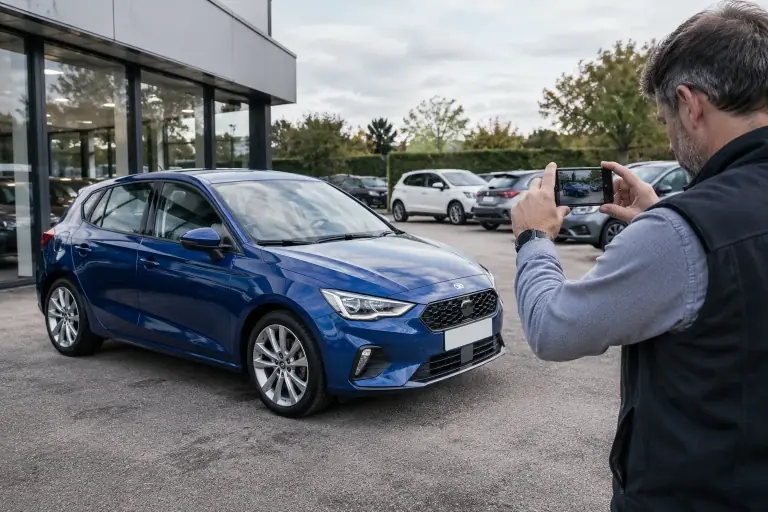
Used car stock turn: how to calculate and manage it from purchase to sale
How to calculate used car stock turn and days in stock, what the market average is, and how to cut delays in buying, preparation and advertising.

In this article
Key findings
- Stock turn is calculated by dividing the number of cars sold in a period by the average number of cars in stock. A dealer who sells 360 cars a year and holds 60 on average turns the stock six times a year, so each cycle takes roughly 61 days.
- Days in stock run from the moment the car is taken over to the moment it is handed to the buyer. They include transport, preparation, advertising and the wait for handover, so the time a car is advertised is only part of the total.
- In Germany, used cars on the monitored portals were advertised for an average of 56 days in September 2026. Once preparation and handover are added, total holding time comes to roughly 65–75 days, which is about five turns a year.
- A faster stock turn only pays off if the capital it releases goes into further cars with an adequate margin. To illustrate: a car with a €1,200 margin that sells in 30 days earns more over a quarter than a car with a €2,000 margin that takes 90 days to find a buyer.
Stock turn shows how quickly a dealership converts the cars it has bought back into cash. A slow turn is rarely the fault of the sales team alone. Often it starts in buying, when the business adds cars that the market already has in abundance, or when days are lost waiting for the workshop, the photographer and the handover. Sales can therefore report good results while part of the capital sits in unsold cars for a long time. Anyone who wants real control over their stock has to look at buying, preparation, pricing, advertising and margin together.
How is used car stock turn calculated?
For day-to-day management, the clearest way is to calculate stock turn in units:
Stock turn for a period = cars sold in the period ÷ average number of cars in stock over the same period
Average stock is best captured as the average of daily stock levels. Averaging the opening and closing figures is an acceptable shortcut, but only if stock levels did not change much in between. As soon as the business buys a larger number of cars in one go, for example a fleet returning from leasing, that simple average distorts the result.
Illustrative calculation
A dealer sells 360 cars a year and holds an average of 60 cars in stock:
360 ÷ 60 = 6 turns a year
If neither stock levels nor the pace of sales change much during the year, this corresponds roughly to:
365 ÷ 6 = 61 days per stock cycle
These 61 days, however, are simply the stock turn expressed in days. They are not the measured average time for which the business actually held the cars it sold. The two figures diverge mainly when stock is growing, when sales follow a seasonal pattern or when older cars build up in stock.
For a financial view, stock turn is calculated in money: the cost of the cars sold is divided by the average cost value of the stock. Both figures must be on the same cost basis. Dividing sales revenue by the purchase value of the stock would mix stock turn with margin.
What is the difference between days in stock and days advertised?
One figure is not enough to run a used car operation. You need several time measures recorded separately, because each of them exposes a different problem.
| Metric | How to calculate it | What it reveals |
|---|---|---|
| Total days in stock for a sold car | From takeover at purchase to handover to the buyer | How long the whole trading cycle takes |
| Time to advertise | From takeover to the first time the advert goes live | Where transport, preparation and paperwork cause delays |
| Days advertised | From the first time the advert goes live until the listing ends | How long the car is on offer to the market |
| Age of current stock | From takeover to the reporting date | How much capital is still tied up in unsold cars |
| Time to handover | From closing the sale to handover to the buyer | Where cars are held up between the sale and leaving stock |
Total holding time starts when the car is taken over, not when it arrives at the sales site or when the advert goes live. Transport counts as well, because the business already owns the car and is paying for it while it is on the road. The end of the cycle is always tied to handover to the buyer, while the date of payment is tracked separately for cash-flow management.
Average holding time for sold cars should always be read alongside the age of current stock. If the cars leaving are mainly the easy sellers, the first figure looks healthy even though the rest of the stock is ageing in the meantime.
Stock Report from Carsdata shows days in stock and stock value, compares each car with the market and flags those that need action. It is also useful for dealer groups, where an aggregate sales figure can easily mask differences between individual sites.
What is a good stock turn?
There is no single figure that holds for every dealer in Europe. Mainstream compact cars, premium models and specialist commercial vehicles face different demand and need different amounts of preparation.
According to the trade publication AUTOHAUS, used cars on the monitored portals in Germany were advertised for an average of 56 days in September 2026, at an average asking price of €26,879. The full cycle is longer, because the time before the advert goes live and the wait for handover have to be added. If these stages take one to two weeks, total holding time comes to roughly 65–75 days, or about five turns a year. A dealer achieving six or more turns is therefore faster than the market average. Fewer than four turns, on the other hand, usually means that part of the stock is standing considerably longer than is normal in the market.
The target therefore has two components:
- Own performance: the dealer compares total holding time, stock turn and margin for the same stock mix and over the same period.
- Market pace: time on offer is compared with similar cars that match on model, age, mileage, powertrain, transmission and sales market.
For a mainstream car, an illustrative time budget could be 5 days to advertise, 50 days on offer and 5 days to handover, making 60 days in total. Each stage then has its own limit and a person who is accountable for it.
How does stock turn relate to margin?
A higher margin per vehicle usually comes at the price of a longer holding period. Conversely, quick sales achieved through heavy discounts improve stock turn but damage the result.
Take two cars bought at a similar price. Car A earns a €2,000 margin but takes 90 days to sell. Car B earns only €1,200 but sells in 30 days. Over the same 90 days, the same capital and the same space in stock can therefore turn over three cars like B, which together earn €3,600.
Stock turn also determines how much capital the stock ties up. To illustrate: a dealer who sells 360 cars a year at an average cost of €25,000 needs, at six turns, a stock of 60 cars worth €1.5 million. At eight turns, 45 cars would be enough and €375,000 would be released.
Alongside stock turn, the report should therefore show:
- the margin per car after deducting the purchase price and direct costs;
- the total contribution earned by the cars sold in the period;
- the average amount of capital tied up in stock;
- the age of cars that have not yet sold.
Released capital is only worth having, however, if the buying team can reinvest it in cars that are in demand and earn a margin, and if preparation can keep pace. The cheapest way to speed up is to remove the waiting before the advert goes live: the cycle gets shorter without any change to the selling price. How to set repricing rules, and when it is better to sell a car to the trade or at auction, is covered in the article on aged stock.
How do you buy cars that will leave stock quickly?
Buying has to start from demand in the market where the car will be sold. A low purchase price is no help if the business is adding more cars to a segment where supply is already piling up.
Before you buy a car, you need four pieces of information in front of you: what you will sell it for, what the direct costs will be, how long it will wait for a buyer and how many similar cars you already have in stock. Do not forget preparation capacity either. If you buy a large batch at once, the cars will be queuing before the first advert has even appeared.
Demand also differs considerably from one market to another. According to ACI, petrol hybrids accounted for 12% of used car ownership transfers in Italy in September 2026, whereas battery electric cars made up just 1.4%. In Germany, battery electric cars have reached a 5% share of used car ownership transfers since the start of 2026. In Italy, the Fiat Panda accounted for 8.7% of used car transfers in September 2026 and the Volkswagen Golf for 2.1%. A share of transfers, however, only says how big a market is. How quickly a particular car will sell only becomes clear when it is set against current supply and the way that supply is changing. A broader view of the markets is given in the article on used car market trends in Europe.
Market Data from Carsdata shows supply, prices, time on market and estimated sales volumes for individual markets and segments. Buyers can therefore tell a large market apart from a segment in which supply is growing faster than sales. Sourcing brings together listings from European portals and auctions without duplicates and, for each car, estimates what it will sell for in the dealer's market, what margin it will earn after the dealer's own transport and preparation costs, how liquid the model is and how long it is likely to be advertised.
How does this work for typical stock cars?
| Buying situation | What the decision should take into account |
|---|---|
| Volkswagen Golf VII 1.5 TSI (110 kW) bought in from a private seller; the dealer already has similar cars on offer | How many comparable cars the dealer already holds and how old they are; another one must not simply add to stock that is already selling slowly |
| Several Škoda Octavia 2.0 TDI returned from leasing at the same time | Whether preparation can handle the whole batch; it is better to stagger takeover in line with the pace of sales |
| BMW 320d (G20, 140 kW) from an auction abroad | How long comparable cars are advertised in the target market, transport and the date the advert can go live; a premium car ties up more capital per unit |
| Toyota Yaris Hybrid (2020 onwards, 1.5-litre engine) | What demand for hybrids is like in the target market and how many comparable cars are on offer in the region |
How to sell faster: where time is lost in preparation and advertising
Preparation has to be planned at the point of purchase. For every car it should be clear in advance how much work it needs, when it will be ready and who will pass it on to the next stage.
| Stage | Common cause of waiting | Practical solution |
|---|---|---|
| Takeover and transport | Unclear transport date or missing documents | The transport date and list of documents are settled when the purchase decision is made |
| Technical preparation | The scope of repairs is only decided when the car's turn comes in the workshop | An inspection on arrival sets the scope of work and books the workshop slot |
| Cleaning and photography | Finished cars wait for capacity to free up | Fixed back-to-back slots instead of separate queues |
| Advertising | Equipment details or an approved price are missing | Advert content is prepared in parallel with the car itself |
| Handover to the buyer | Outstanding work is only dealt with after the sale is closed | A checklist of tasks and clear responsibility for the handover date |
A live advert does not mean the car is ready to sell. If the advert lists the wrong transmission, incomplete equipment or poor photographs, the car is formally on offer but buyers scroll past it. The gallery should also include a shot of the instrument cluster showing the mileage. Photo Checker checks the gallery before it goes live: it makes sure the recommended shots are there, rates the quality of each photo, detects blur, glare, poor framing as well as logos or watermarks, and lists the shots that need to be retaken.
To manage stock turn, it is enough to distinguish two situations: either the car is waiting to be put on sale, or it is on offer and not selling. The second case calls for a separate diagnosis of price, advert and demand, which is the subject of the article on why a used car is not selling. Treating both situations the same way leads to discounting cars that simply needed their preparation finished.
What should a regular stock report include?
Each reporting cycle serves a different purpose. The daily overview shows what is holding up operations right now, the weekly meeting deals with cars and segments that need action, and the monthly review puts stock turn in the context of margin and stock value.
| Frequency | Metrics | Management output |
|---|---|---|
| Daily | Cars not yet advertised, preparation time, missed deadlines | Who removes the obstacle, and by when |
| Weekly | Stock age, days advertised, enquiries, comparison with the market | Action on a specific car or a change to the buying plan |
| Monthly | Stock turn, holding time of sold cars, margin, stock value | Changes to the stock mix and the allocation of capital |
For an overview of stock age, it helps to group cars into bands of 0–30, 31–60, 61–90 and more than 90 days. These are reporting bands, not automatic discount dates. For each band, track both the number of cars and their cost value, because a few expensive cars tie up more capital than a larger number of cheaper ones.
The average should be complemented by the median and by the share of cars that have exceeded the internal limit (aged stock). The median shows how the typical car is doing, and the share of aged stock reveals the part of the stock that an average hides.
What to watch out for when assessing stock turn
Measuring sold cars only. A short holding time for cars that have sold hides the rest of the stock, which keeps ageing. Unsold cars therefore belong in the report too.
Retail and trade sales in one figure. Quick sales to other dealers flatter the overall stock turn. Retail and trade sales should therefore have their own stock turn and margin.
Stock growing faster than sales. More sales do not mean a better stock turn if average stock is growing faster. Capital is then released more slowly.
Comparing sites with a different stock mix. An overall league table favours the site that sells the faster-moving categories. A comparison only makes sense for similar price levels and vehicle types.
A new advert that wipes the history. Re-advertising a car does not change the date on which the business started holding it. Records must therefore keep the original takeover date and the full listing history.
Carsdata connects stock management with the market
Carsdata collects used car listings and auction offers from European portals, removes duplicates and standardises vehicle data. Dealers can therefore compare their own stock and buying opportunities with the whole market, not just with what they see on a single portal.
- Stock Report compares stock with the market, recommends a price for each car and flags the cars that need action, whether that is repricing, adding equipment to the advert, better photos or a different category. It shows stock value and days in stock, including across a dealer group.
- Sourcing estimates, for listings from portals and auctions, the selling price in the dealer's market, the margin after the dealer's own costs, the liquidity of the model and the time it is likely to be advertised, so that buying can focus on cars that will leave stock quickly.
- Market Data shows how supply, prices and time on market are developing in individual markets and segments, helping dealers manage their stock mix.
The data can be fed into the dealer's own systems via API or through a native integration with Omnetic DMS. Decisions on buying, pricing and changes to adverts remain with the dealer.
Book a Carsdata demo focused on managing your own stock or your dealer network.
FAQ
Does a reserved car still count as stock?
Yes. If the business treats handover to the buyer as the end of the cycle, a reserved car remains in stock until it is handed over. A separate reservation status helps to distinguish a deal in progress from a car that is still waiting for a customer.
Does a transfer between sites start a new stock period?
Not from the point of view of the group as a whole: the original takeover date stays. Alongside it, however, the receiving site records its own arrival date, so that total holding time can be separated from the time the car has spent at each sales site.
How should cars sold on commission be included in stock turn?
Separately from the dealer's own stock. Commission cars take up forecourt space and the team's time, but they do not tie up the dealer's capital. For assessing sales, a combined number of cars handed over can be reported, but the stock turn of the dealer's own stock must use the same set of cars in both sales and average stock.
Sources
- https://www.autohaus.de/nachrichten/gw-trends/ebrauchtwagenmarkt-unter-druck-bestaende-steigen-preise-sinken-3925325
- https://aci.gov.it/comunicati-stampa/mercato-a-settembre-ogni-100-auto-nuove-vendute-213-usate/
- https://www.lautomobile.aci.it/attualita/auto-usate-piu-vendute-in-italia-a-settembre-2026/
- https://www.kfz-innung-mittelbaden.de/newsletter-10-2026/dat-barometer-im-september-2026-hier-schwerpunkt-kba/
- https://www.cebia.cz/pruvodce/jak-vytvorit-inzerat-na-prodej-auta
- https://www.volkswagen-newsroom.com/en/vehicle-data-golf-7-profile-20039
- https://www.motoreport.de/3er-bmw-2019-320d-im-test/
- https://www.toyotanews.eu/cs/press-kit-cz/1739-item-press-kit-zbrusu-nova-toyota-yaris-2020
- https://carsdata.com/about
- https://carsdata.com/products/stock-report
- https://carsdata.com/products/sourcing
- https://carsdata.com/products/market-data
- https://carsdata.com/products/photo-checker
- https://www.netconnection-gmbh.de/ratgeber/standzeiten-im-autohandel-was-jeder-tag-auf-dem-hof-wirklich-kostet